In these works, blue is not used primarily as a descriptive colour. It behaves as depth, weight, atmosphere and material condition. Mineral turquoise, green-tinged night blue, shadowed-water blue, deep Atlantic blue, lunar-abyss blue, pale mineral blue, rain-grey blue, ice blue, water-shadow blue, deep-memory blue, after-rain blue, oxidised blue, mineral greys and dark submerged tones are layered with sand and natural sediment.
Each blue is individually developed and tested in the studio by the artist, using only primary colours rather than pre-mixed commercial shades. Through controlled mixing, layering, absorption and tonal adjustment, the palette achieves depth, complexity and mineral resonance. These blues are not conceived as decorative colour; they function as matter, atmosphere, weight and perceptual depth. Some areas absorb light; others reflect it. Some appear fluid, while others become dense and geological. The result is not an image of water or mountain. It is a painted territory in which colour behaves as matter.
Blue as
Mineral Behaviour
Surfaces That
Change with Light
The works are designed to be experienced over time. Under diffuse daylight, the surfaces appear quieter and more atmospheric. Directional light reveals relief, granularity and tonal interruptions. At closer range, sediment, incisions and accumulated layers become visible. From a distance, they merge into a continuous perceptual field. This changing relationship between matter and light is central to the work and should be considered when placing and illuminating each painting.
Many works are developed at a scale that exceeds conventional domestic painting .Their dimensions create a bodily encounter. The viewer does not simply observe the work; the work occupies peripheral vision, alters spatial perception and changes the emotional temperature of the environment. This scale allows the paintings to enter into dialogue with architecture while retaining their autonomy as works of art.
Surface produced
by Substraction
The mountain we see today is, quite literally, a surface produced by subtraction.Much of what defines Serra da Estrela is not the result of matter being added, but of matter that has: disappeared; dissolved; fractured; been transported; been eroded; been deposited elsewhere. The present form of the territory is therefore inseparable from processes of removal, displacement and loss.
This idea — form produced through loss — is central to my understanding of painting. A surface does not need to be constructed only through accumulation. It can also emerge through abrasion, washing, scraping, exposure, fragmentation and the partial removal of previous layers.
This changes the meaning of sediment within my practice. Sediment is not simply texture, surface effect or evidence of the use of natural material. It can be understood as: displaced matter that retains evidence of the force that transported it. When incorporated into painting, sediment introduces questions of origin, movement, pressure, duration and relocation. It establishes a physical connection between the material’s previous condition in the territory and its new position within the artwork. Its significance lies not only in what the material is, but in what has happened to it: where it originated; how it was detached what transported it; where it accumulated; and how its position changed over time. In this sense, sediment functions as both material and record. My paintings do not attempt to illustrate glacial landscapes or reproduce geological formations. Instead, they adopt related operations: accumulation, displacement, compression, abrasion, removal, concealment and exposure. The territory is not represented as an image. Its processes inform how the painting is physically constructed.This changes the meaning of sediment within my practice. Sediment is not simply texture, surface effect or evidence of the use of natural material. It can be understood as: displaced matter that retains evidence of the force that transported it. When incorporated into painting, sediment introduces questions of origin, movement, pressure, duration and relocation. It establishes a physical connection between the material’s previous condition in the territory and its new position within the artwork. Its significance lies not only in what the material is, but in what has happened to it: where it originated; how it was detached; what transported it; where it accumulated; and how its position changed over time. In this sense, sediment functions as both material and record. My paintings do not attempt to illustrate glacial landscapes or reproduce geological formations. Instead, they adopt related operations: accumulation, displacement, compression, abrasion, removal, concealment and exposure. The territory is not represented as an image. Its processes inform how the painting is physically constructed.
Sedimentation as a
Memory of Movement
Glacial
Memory
As a glacier moves, it transports sediments ranging from fine particles to large rock fragments. When the ice loses transport capacity, stabilises or retreats, part of that material is deposited. These accumulations form moraines. Morainic deposits are often poorly sorted. Fine sediments, gravel and large blocks may coexist within the same deposit because glacial transport does not organise particles in the same way as flowing water. Researchers use the position, composition and distribution of moraines to reconstruct former glacier limits and different phases of glacial retreat. In Serra da Estrela, moraines at Covões, Espinhaço do Cão and Covão de Albergaria have been studied to identify successive stages in the retreat of the Zêzere Glacier. The conceptual consequence is significant: an apparently disordered deposit contains information. It is not geological waste. It is a material record. The distribution of sediments can indicate: where the ice was located; how far it advanced; where it remained relatively stable; and through which stages it retreated. The deposit records movement after the movement itself has ended.
Recent studies of lake sediments in Serra da Estrela, particularly at Lake Peixão, have contributed to the reconstruction of different stages of deglaciation and the environmental changes that followed. Sediments accumulated at the bottom of lakes function as stratigraphic archives. Layer after layer, they retain mineral particles, organic remains and chemical indicators associated with the environmental conditions of different periods.The visible surface of the lake belongs to the present. Its bed contains successive pasts.
This structure is directly relevant to my approach to painting through layers. What is visible on the surface does not necessarily replace or eliminate what lies beneath it. Earlier material may remain partially concealed, compressed, interrupted or exposed again through later actions. The final surface is therefore not a single moment. It is the present condition of a longer material sequence.
Implications for
Paintings
Material vocabulary
Sediment as Material Memory
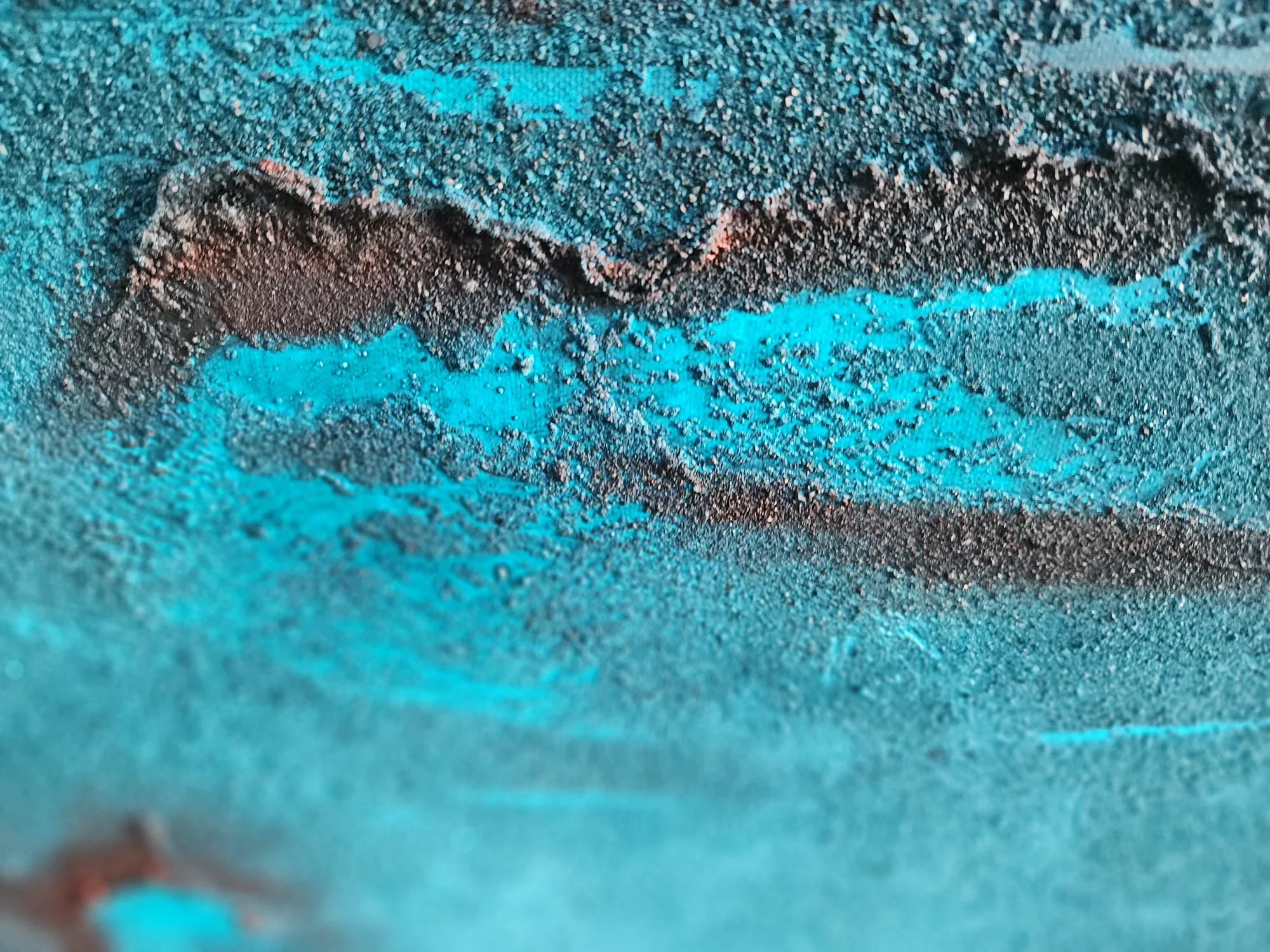
Absorption
Determines how pigment enters, stains or remains suspended on the canvas.
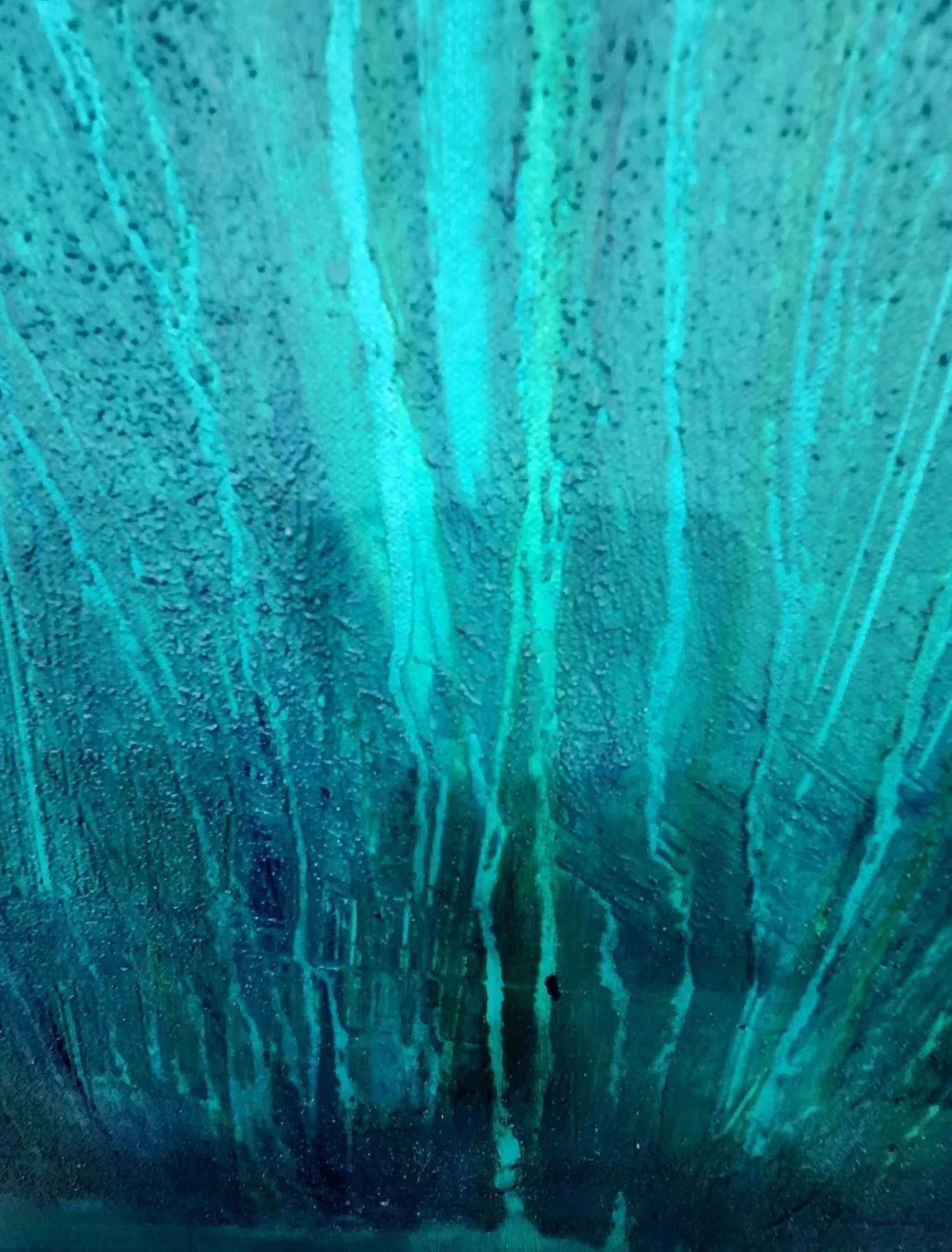
Gravity
Directs fluid movement, vertical descent and the accumulation of matter.
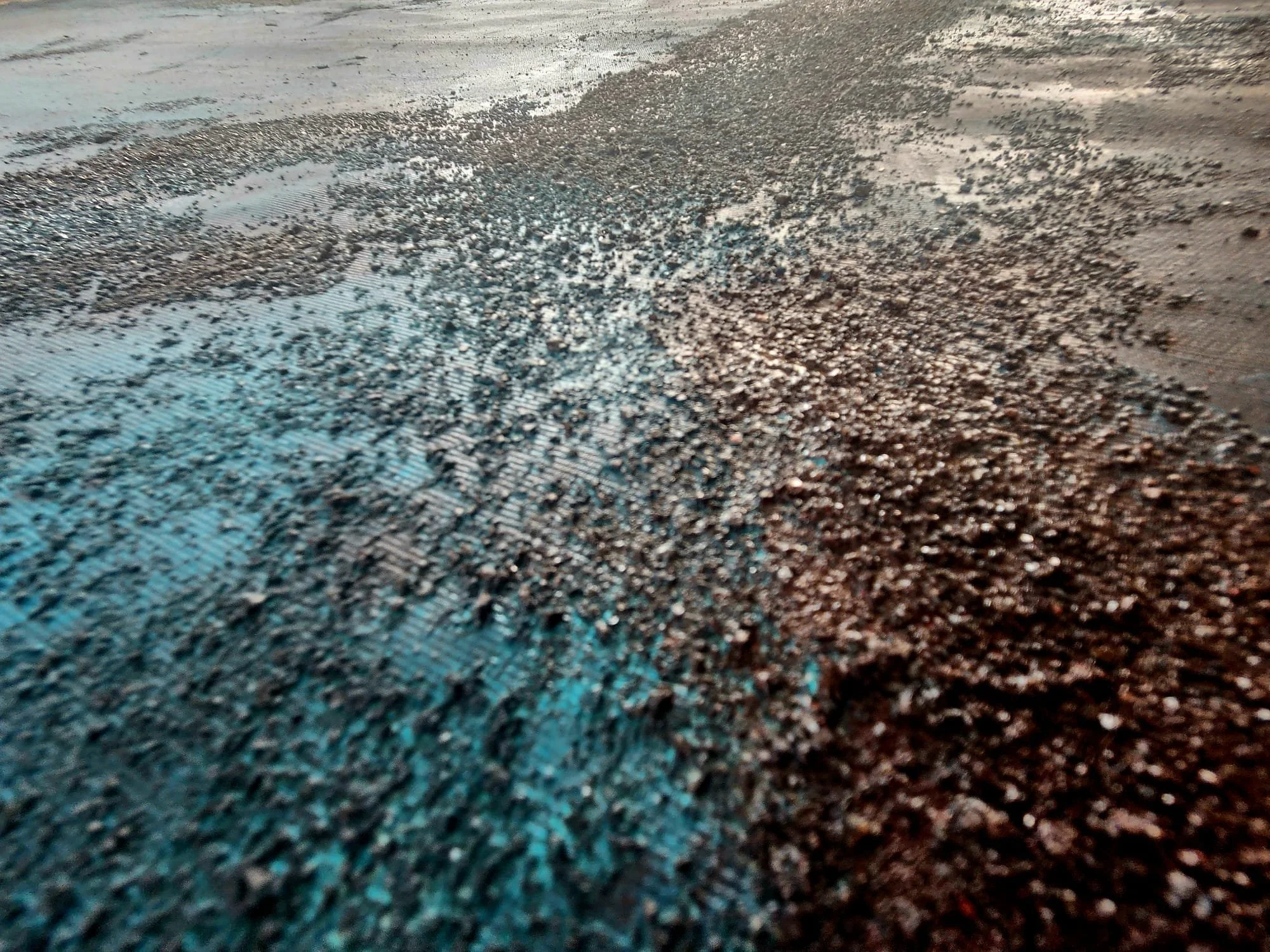
Sand Pigments
Introduce granular density, tonal variation and a dry mineral presence.
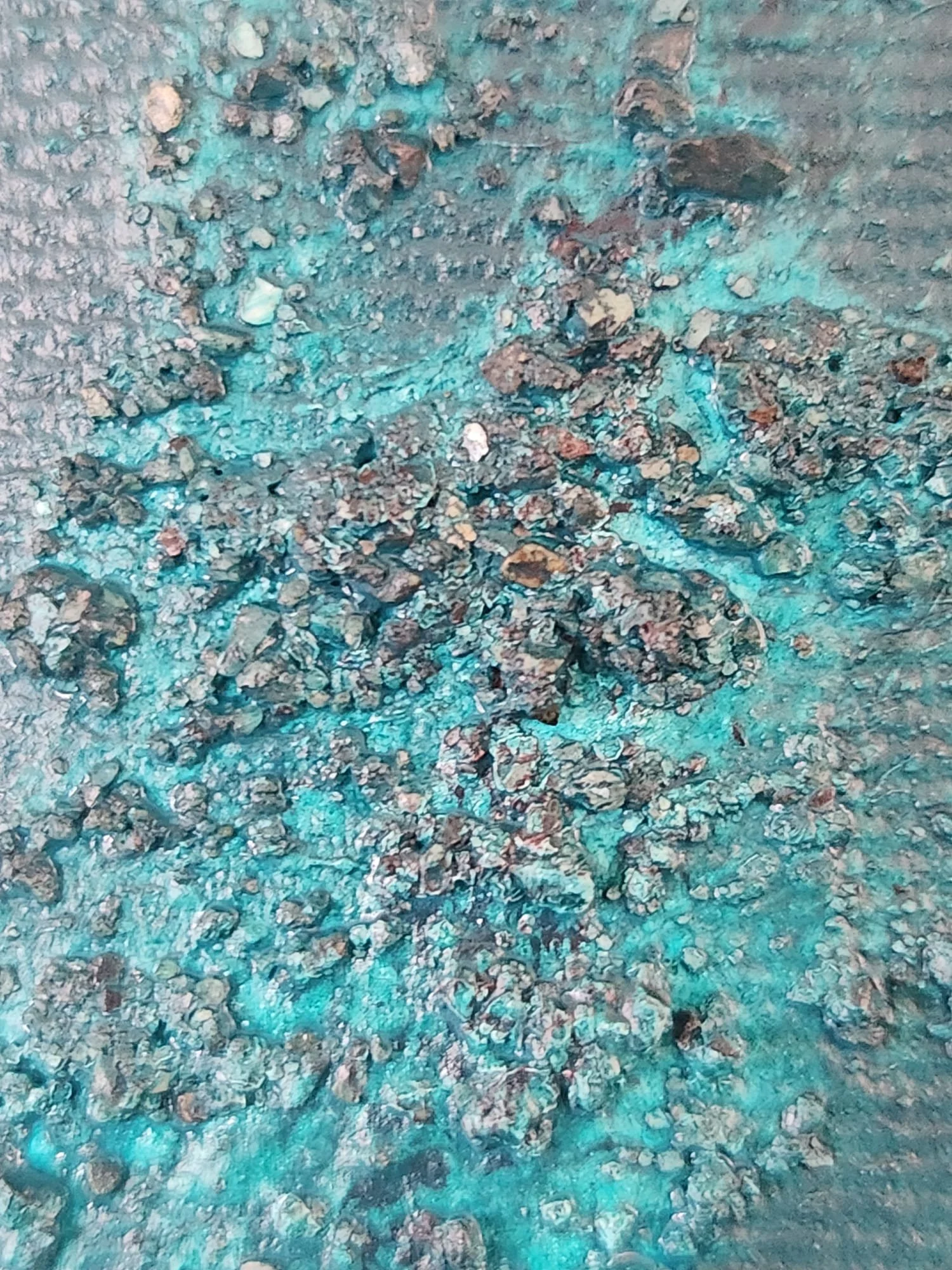
Natural Sediments
Carry irregular particles and physical traces of the territory into the painted surface..
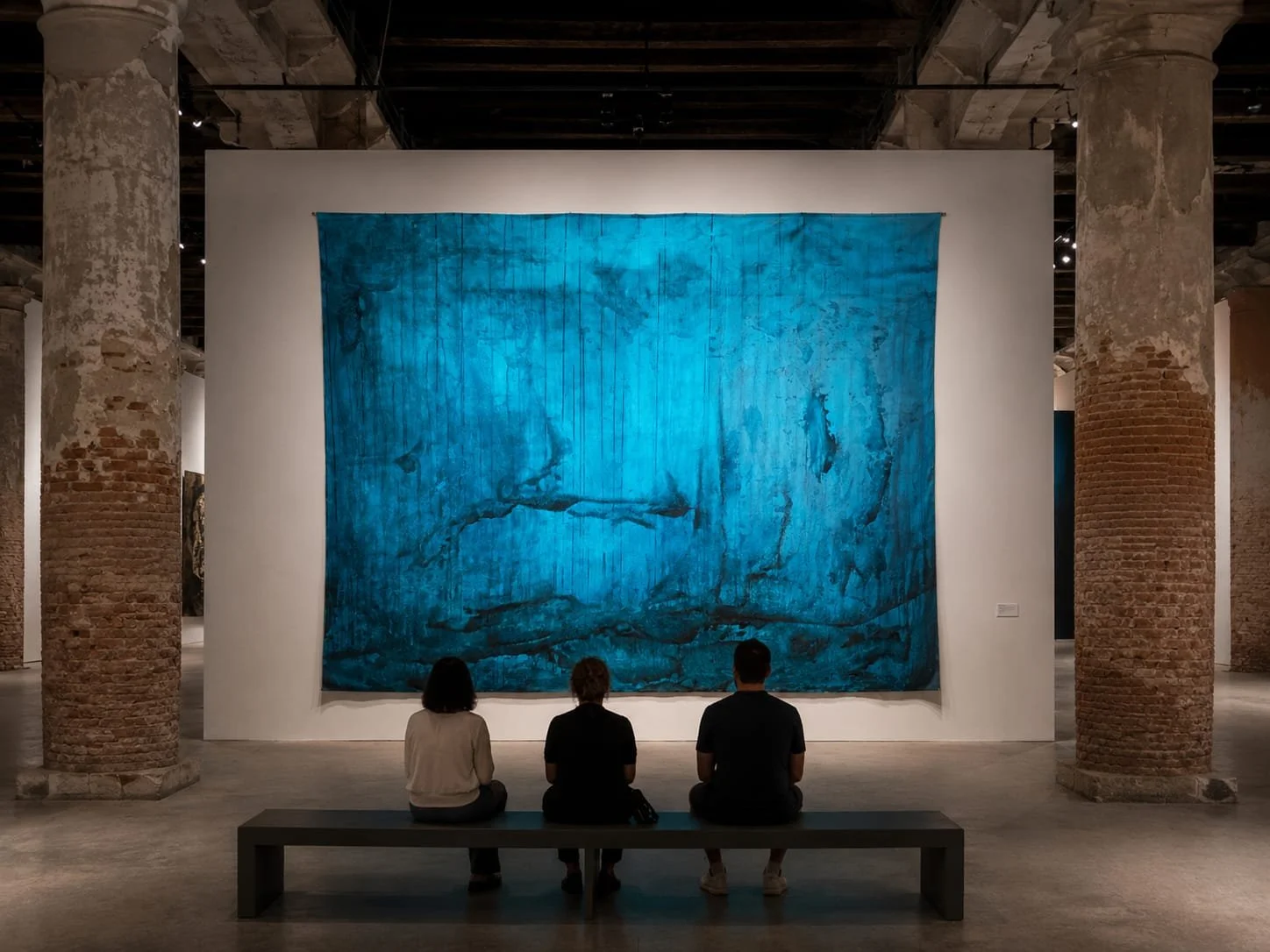
Bodily Scale
Large dimensions place the viewer in a physical relationship with the work rather than allowing it to be perceived only as an image.
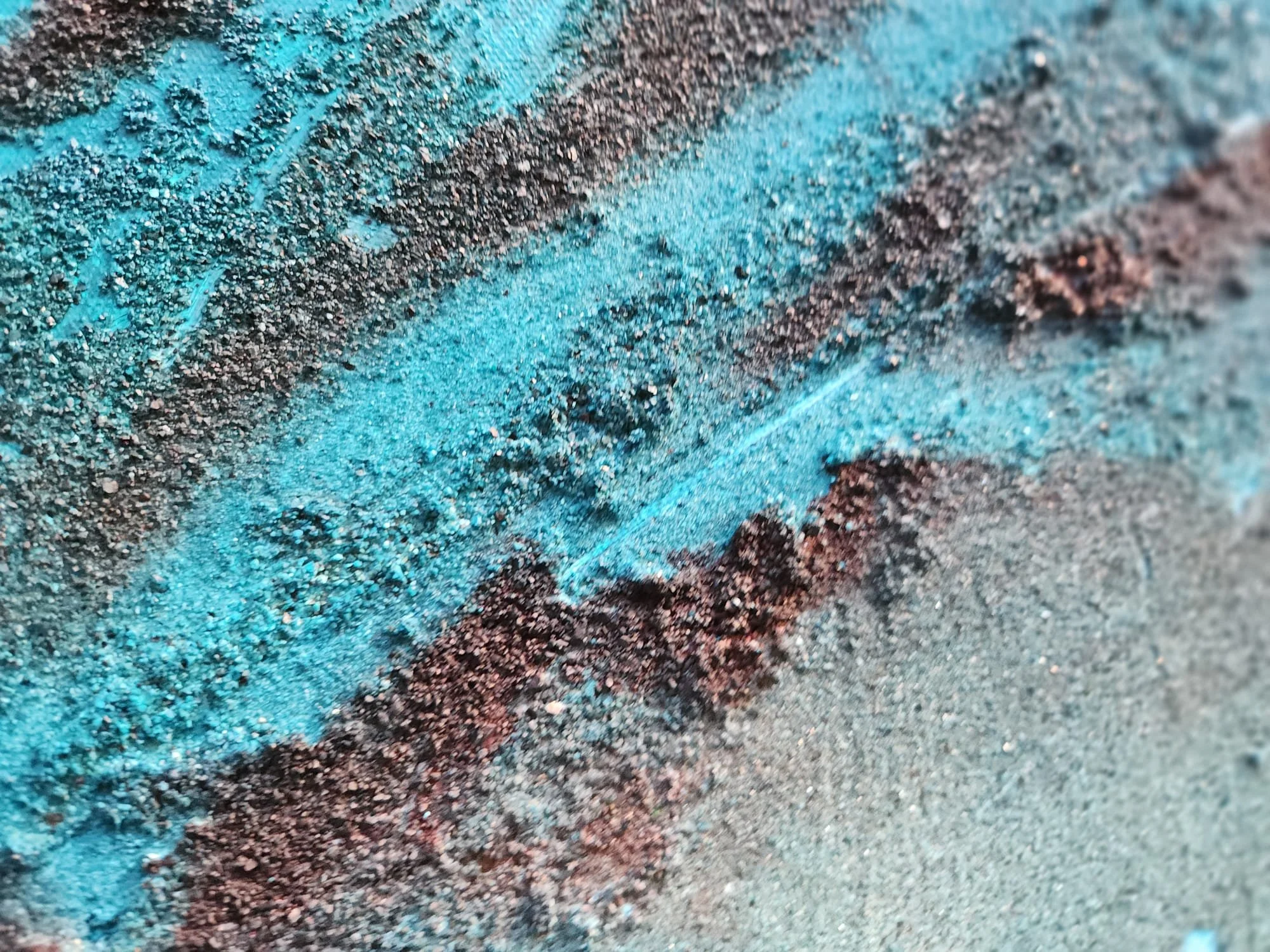
Erosion
Removes, exposes and interrupts layers, allowing previous states of the painting to remain visible.
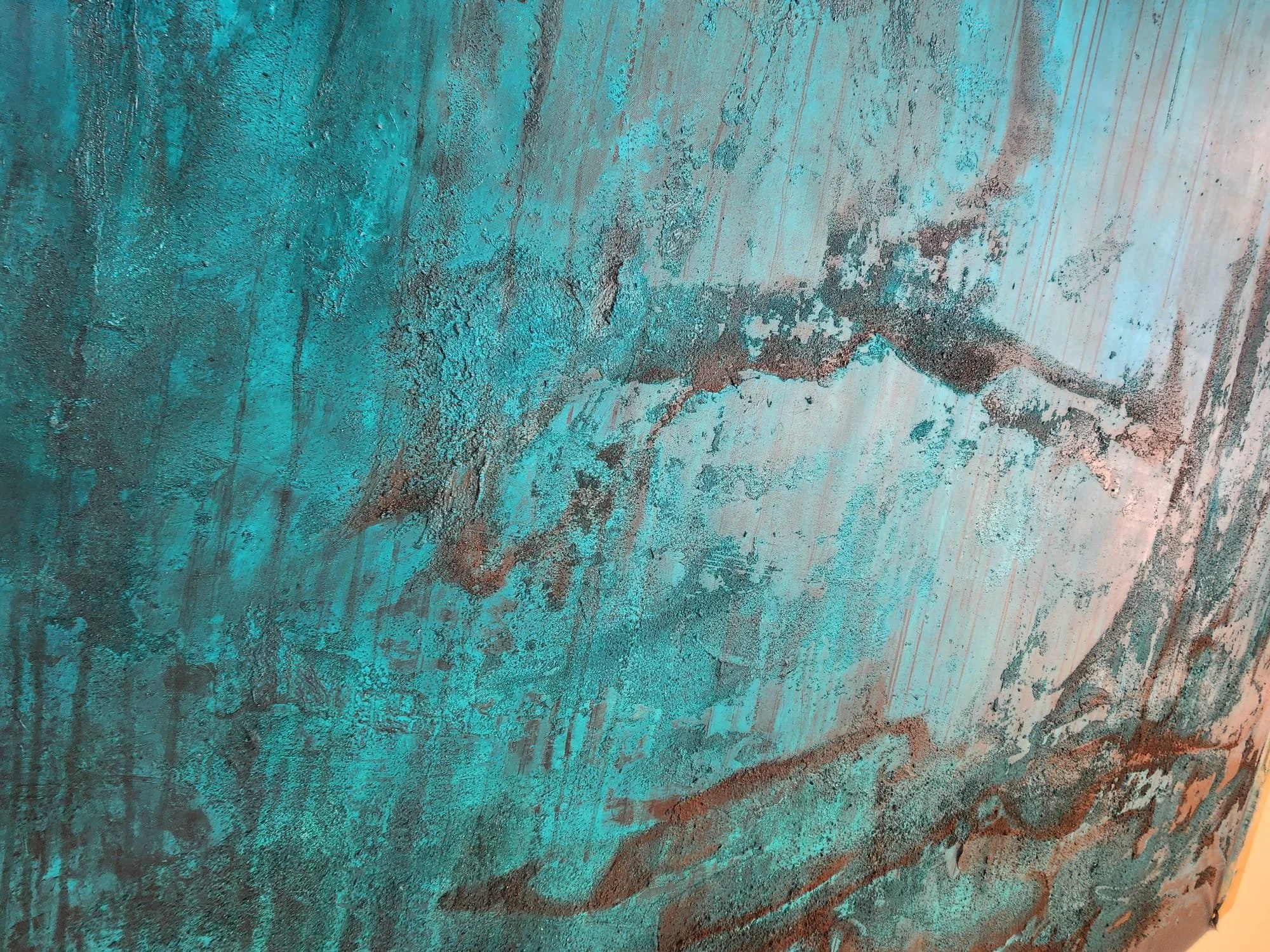
Natural sediments are gathered selectively and in limited quantities. The objective is not extraction, but material connection. The use of these elements remains controlled and secondary to the painting process. Each work is tested for adhesion, stability and compatibility with acrylic media before completion.
Responsible Use
of Natural Materials
Matter and Light
Granular surfaces absorb, scatter and reflect light differently throughout the day.
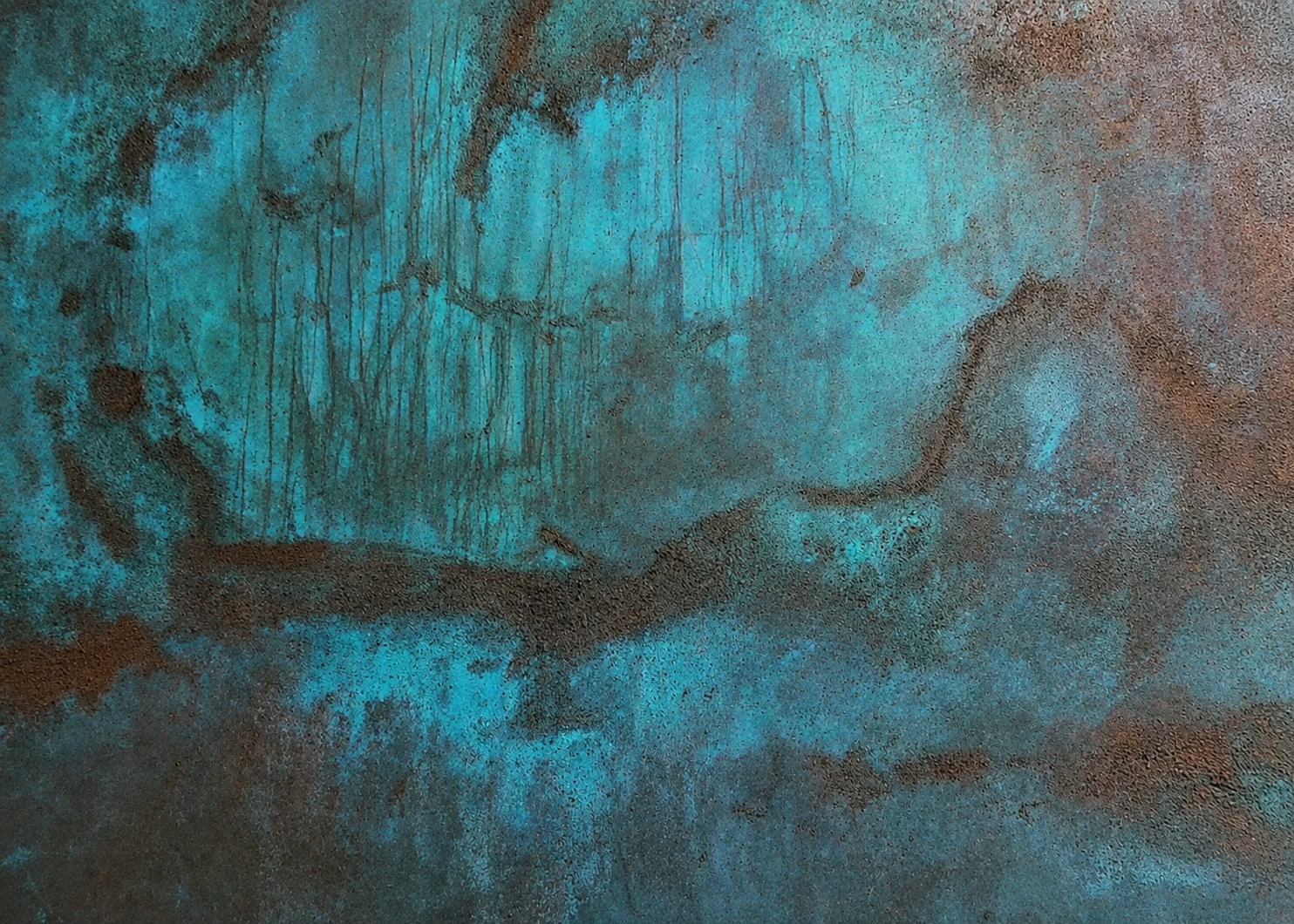
Sediment is not Texture
Sediment is not simply texture. I am increasingly interested in material not as an effect applied to a surface, but as evidence of process.
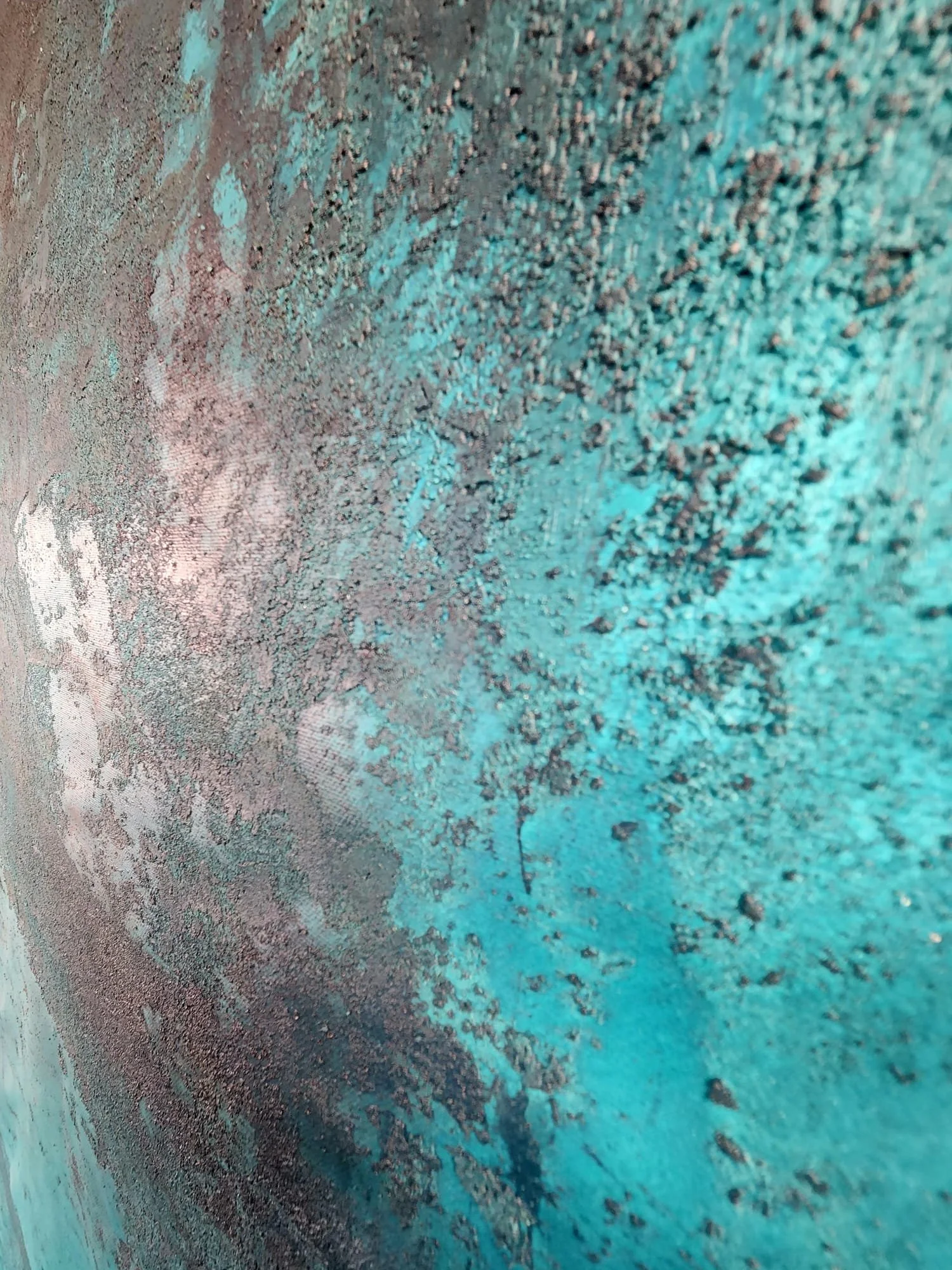
Weathering
The transported material remains. The ice is gone. The valley remains. The altered surface remains.
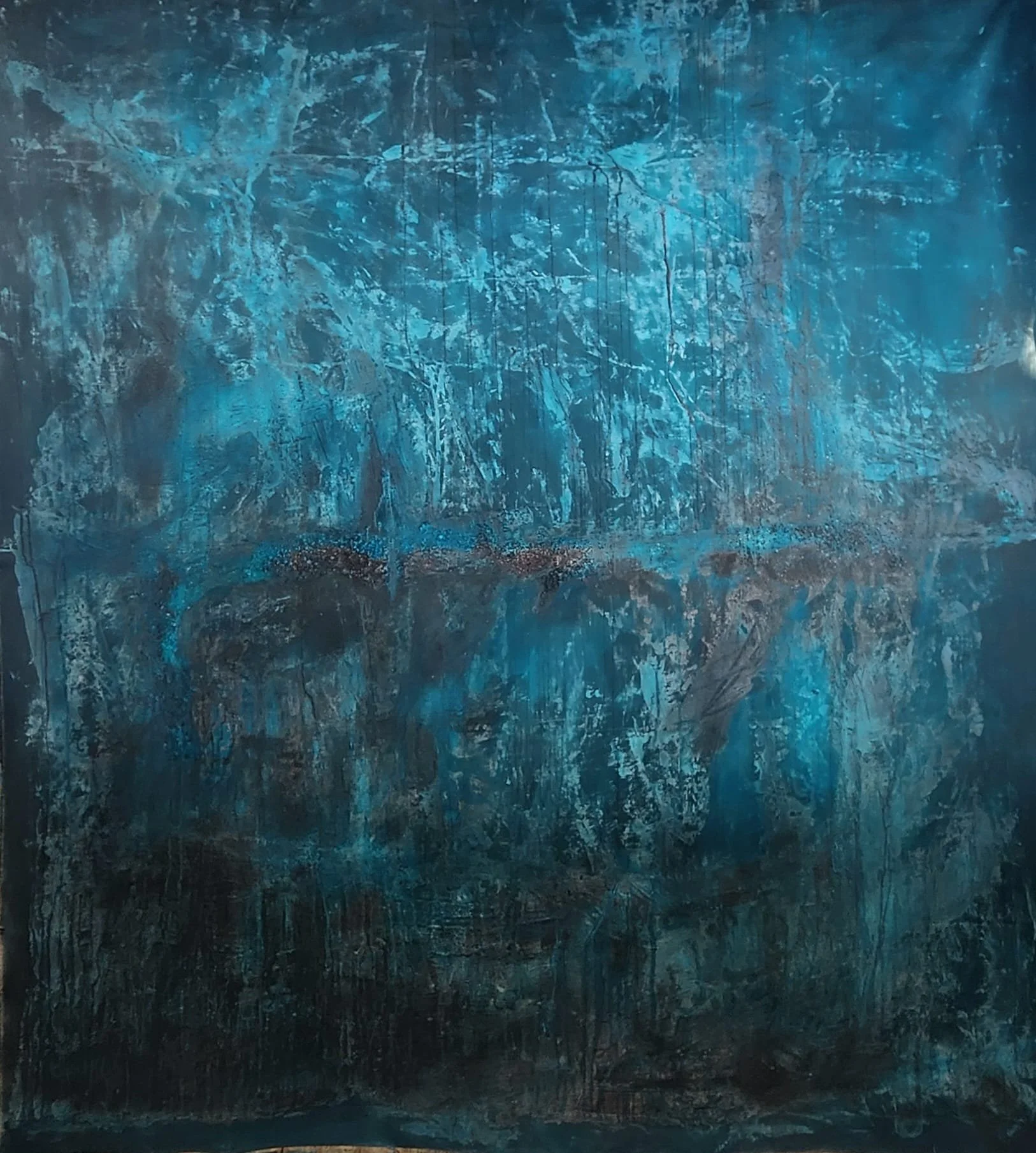
Mountain as Archive
A landscape can function as an archive without containing a single written document. Rivers and Lagoons preserve evidence of changing energy in their deposits.
Bodily scale and
architecture
I do not paint the mountain Serra da Estrela as scenery. I Study I work with what the territory teaches: resistance, erosion, accumulation, silence, gravity and duration. The mountain enters the painting through physical matter and through the way I construct a surface. What remains is not a representation of place, but a field in which place has become material.